Get our latest book recommendations, author news, and competitions right to your inbox.
Published by Prometheus
Distributed by Simon & Schuster
Table of Contents
About The Book
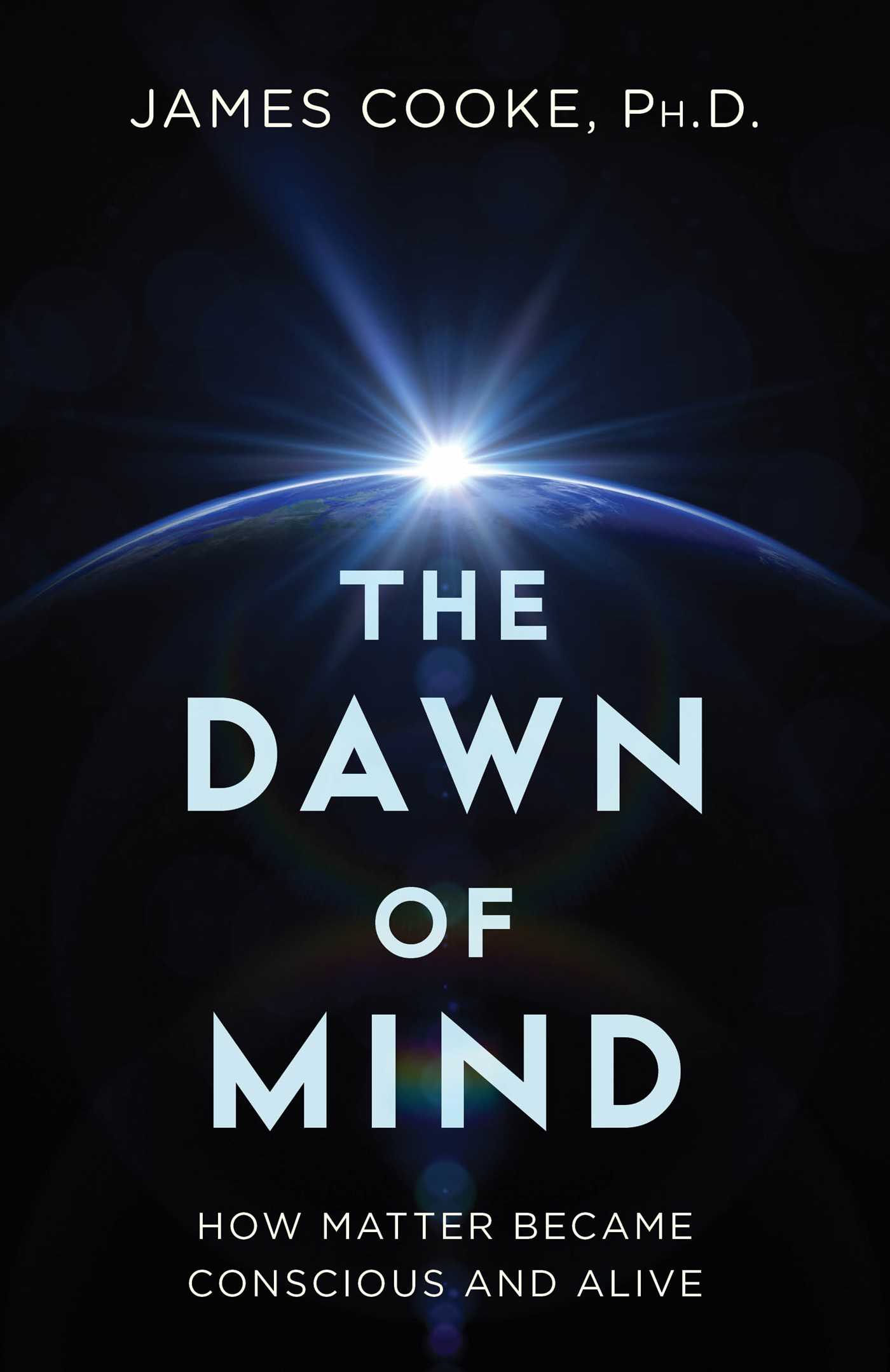
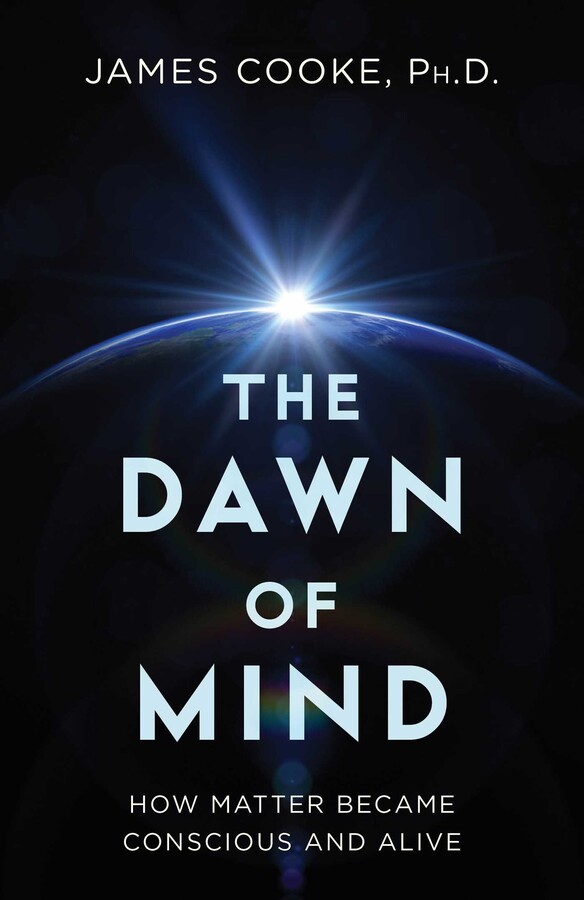
Although consciousness is at the very center of who we are, its exact nature continues to confound modern science. From where does consciousness originate? At our core, are we material bodies or immaterial conscious minds? Many assume that consciousness is a product of our complex brains, a product of evolution—and yet, there is no evolutionary reason that a mechanical function of the brain should allow us to enjoy the beauty of a sunrise or become intoxicated with the smell of rain on dry earth. If consciousness is not the product of sophisticated human brains, might the nonhuman living world be conscious? If so, where does that place us in relation to the rest of life on Earth—and what does this imply about our domination and plundering of the natural world for resources? Dr. James Cooke is no stranger to intricate and existential questions such as these, and he confronts them head-on in his compelling, inventive, revolutionary new book, The Dawn of Mind. Weaving together cutting-edge science and the contemplative insights that arise from mystical experience, as occurs with meditation and the emerging therapeutic paradigm of psychedelic medicine, Cooke radically redraws our understanding of what it truly means to be who we are.
Though Cooke approaches the question of consciousness from a rigorous, scientific stance, his first foray into the study of consciousness was an intensely personal one. On a bus ride through Colchester, the ancient Roman capital of Britain, Cooke spontaneously felt himself feeling intensely and fully connected with the natural world around him; his sense of self fell away entirely. This transcendent moment inspired years of scientific study and the contemplative exploration of personal mystical experiences, leading Cooke to a stunning revelation: our sense of self is not an objective fact but an illusion, a survival technique we use to try and find order in a disorderly world. We each construct a boundary between ourselves and the natural world, constantly simulating what will happen around us in order to survive and navigate our surroundings. (Consider this: how long would you make it if you were crossing a busy street and only reacted to an oncoming car reflexively, once you felt its touch on your skin?) Unlike the self, however, consciousness is no such illusion, and is the product of the very same survival process – it is the simulation in which our sense of self appears. Of course, we aren’t the only creatures who function in this way. According to Cooke, consciousness is not complex brain function that only we possess but a deeply embodied phenomenon, an essential feature of being a living thing. Sure, we aren’t conscious in the same way as a tree or a worm, but as living things we are all conscious; just maybe, this notion of our dominion over all other life on earth was a ruse all along. Understanding consciousness in this way is not just some theoretical exercise. As climate change amplifies by the day, a growing chorus of voices insists that our fundamental disconnect from nature is at the root of our ecological crisis. Healing the divide between nature and consciousness may be the key to extricating ourselves from this dire predicament.
Though Cooke approaches the question of consciousness from a rigorous, scientific stance, his first foray into the study of consciousness was an intensely personal one. On a bus ride through Colchester, the ancient Roman capital of Britain, Cooke spontaneously felt himself feeling intensely and fully connected with the natural world around him; his sense of self fell away entirely. This transcendent moment inspired years of scientific study and the contemplative exploration of personal mystical experiences, leading Cooke to a stunning revelation: our sense of self is not an objective fact but an illusion, a survival technique we use to try and find order in a disorderly world. We each construct a boundary between ourselves and the natural world, constantly simulating what will happen around us in order to survive and navigate our surroundings. (Consider this: how long would you make it if you were crossing a busy street and only reacted to an oncoming car reflexively, once you felt its touch on your skin?) Unlike the self, however, consciousness is no such illusion, and is the product of the very same survival process – it is the simulation in which our sense of self appears. Of course, we aren’t the only creatures who function in this way. According to Cooke, consciousness is not complex brain function that only we possess but a deeply embodied phenomenon, an essential feature of being a living thing. Sure, we aren’t conscious in the same way as a tree or a worm, but as living things we are all conscious; just maybe, this notion of our dominion over all other life on earth was a ruse all along. Understanding consciousness in this way is not just some theoretical exercise. As climate change amplifies by the day, a growing chorus of voices insists that our fundamental disconnect from nature is at the root of our ecological crisis. Healing the divide between nature and consciousness may be the key to extricating ourselves from this dire predicament.
Product Details
- Publisher: Prometheus (December 3, 2024)
- Length: 304 pages
- ISBN13: 9781633889934
Raves and Reviews
"Dr. James Cooke is a fascinating thinker, neuroscientist, and explorer of consciousness."
– W. Keith Campbell PhD, author of The New Science of Narcissism
"An invaluable perspective on the elusive connection between matter and mind… essential reading for anyone seeking to understand the greatest enigma of our time."
– Shamil Chandaria PhD OBE
"You will come away with a new understanding of the nature of mind and cosmos, one that helps bridge the unnecessary gap between science and spirituality."
– Bobby Azarian PhD, author of The Romance of Reality
"A remarkably current and forward-looking treatment... It offers a delightful narrative, grounded in state-of-the-art thinking."
– Karl Friston, FRS FMedSci FRSB, University College London
"An ambitious and bold exploration of the mystery of consciousness, The Dawn of Mind is a book well worth reading."
– Prof. Vladyslav Vyazovskiy PhD, Professor of Sleep Physiology, Oxford University
"James Cooke’s new book is part of a growing movement away from substance metaphysics and materialistic science toward a more process-relational approach to the fundamental nature of reality and our human place within it. Cooke not only skillfully introduces some of the implications of such a shift, which directly challenges reductionism, but also carefully steers clear of idealistic excesses."
– Matt Segall PhD, author of Physics of the World-Soul: Alfred North Whitehead's Adventure in Cosmology
Resources and Downloads
High Resolution Images
-
Book Cover Image (jpg): Dawn of Mind
eBook 9781633889934