Get our latest book recommendations, author news, and competitions right to your inbox.
Published by Stackpole Books
Distributed by Simon & Schuster
Table of Contents
About The Book
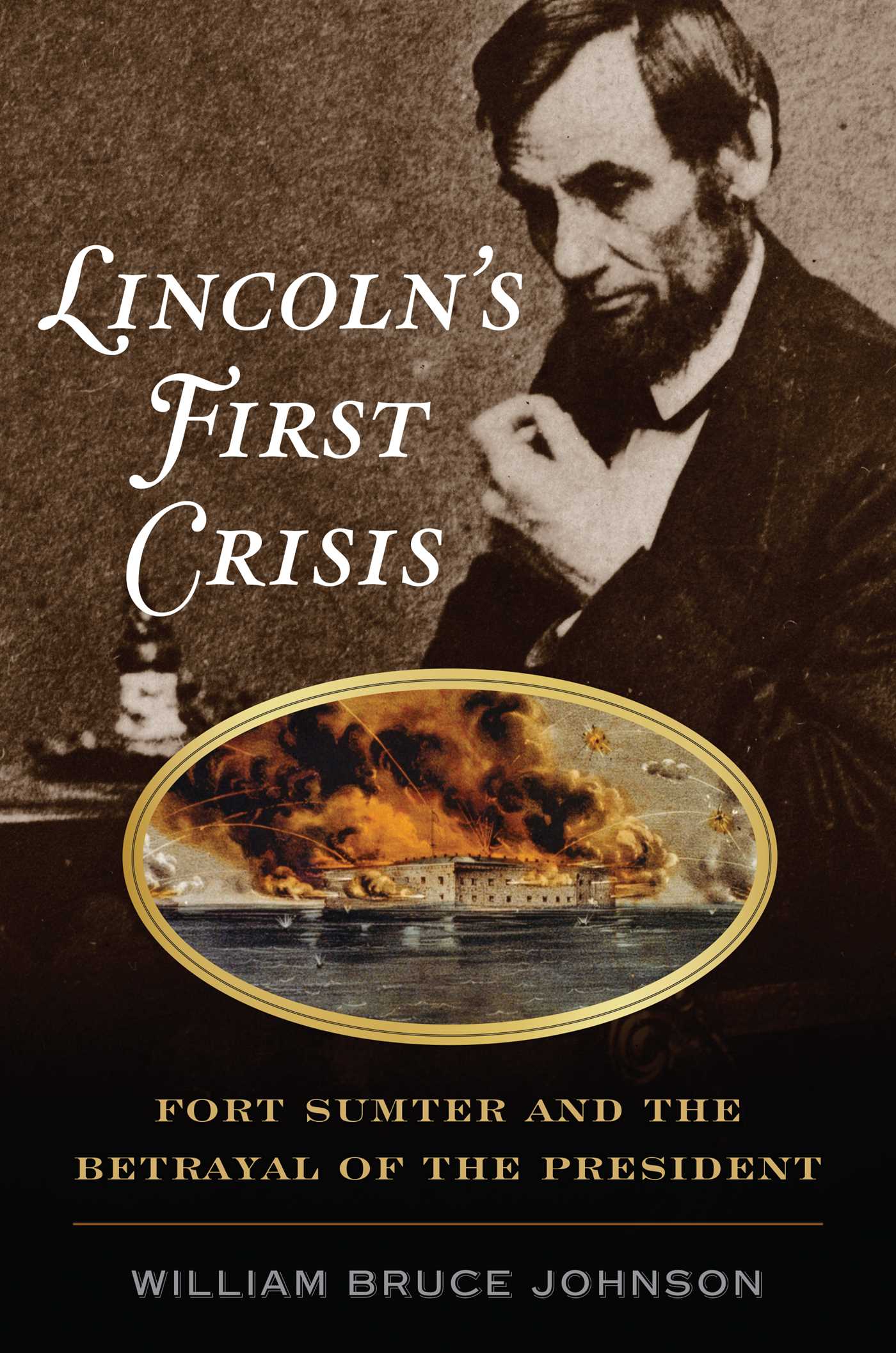
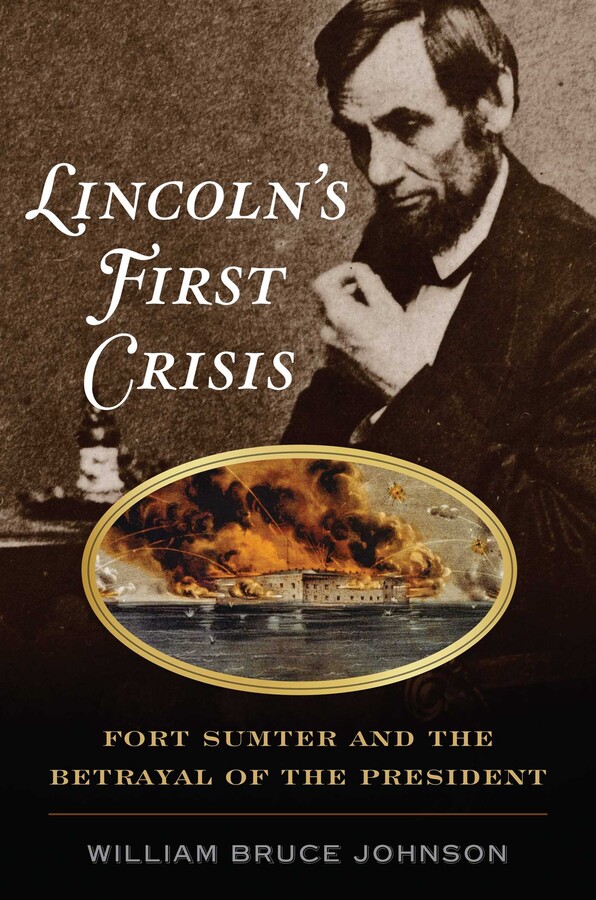
Lincoln’s First Crisis concerns five of the most consequential months in American history: December 1860 through April 1861. When Abraham Lincoln swore his oath as president, the United States was disintegrating. Seven states had seceded, and as many as eight seemed poised to join them, depending upon how the new president handled the secession crisis and its flashpoint: Fort Sumter in South Carolina, the heart of the rebellion. The fate of the republic hung in the balance. The Sumter crisis has been hotly debated and deeply researched for more than 150 years. In this thoughtful reassessment, William Bruce Johnson combines thorough research and the latest historiography with a litigator’s methodical analysis and a storyteller’s eye for meaningful detail.
Shortly after taking office, Lincoln decided upon a plan to avoid war with the seceded states while keeping his inaugural promise to maintain a Union military presence in the South. Because he chose not to reveal his plan to anyone, rumors soon spread that he was simply afraid to act. One source of such rumors was Lincoln’s secretary of state, William Henry Seward. Resentful that Lincoln had deprived him of the Republican nomination and convinced that Lincoln lacked the political sophistication necessary to deal with the secession crisis, Seward decided to negotiate with the Confederacy on his own and in secret. General Winfield Scott, meanwhile, the Union’s most senior military officer, had for a decade depended upon Seward for political advice, and now considered himself under orders from Seward, not the president. Johnson traces how Seward and Scott sabotaged Lincoln’s plan. From this account, from his examination of various personalities (such as that of Fort Sumter’s commander, Major Robert Anderson), and from his granular research into aspects of the Order of Battle in Charleston, Johnson has here constructed a new narrative of this crucial period, culminating in a new theory of how and why the Civil War began as it did, and how and why, if the new president’s orders had been properly carried out by Seward and Scott, it might have been averted.
Shortly after taking office, Lincoln decided upon a plan to avoid war with the seceded states while keeping his inaugural promise to maintain a Union military presence in the South. Because he chose not to reveal his plan to anyone, rumors soon spread that he was simply afraid to act. One source of such rumors was Lincoln’s secretary of state, William Henry Seward. Resentful that Lincoln had deprived him of the Republican nomination and convinced that Lincoln lacked the political sophistication necessary to deal with the secession crisis, Seward decided to negotiate with the Confederacy on his own and in secret. General Winfield Scott, meanwhile, the Union’s most senior military officer, had for a decade depended upon Seward for political advice, and now considered himself under orders from Seward, not the president. Johnson traces how Seward and Scott sabotaged Lincoln’s plan. From this account, from his examination of various personalities (such as that of Fort Sumter’s commander, Major Robert Anderson), and from his granular research into aspects of the Order of Battle in Charleston, Johnson has here constructed a new narrative of this crucial period, culminating in a new theory of how and why the Civil War began as it did, and how and why, if the new president’s orders had been properly carried out by Seward and Scott, it might have been averted.
Product Details
- Publisher: Stackpole Books (July 21, 2020)
- Length: 448 pages
- ISBN13: 9780811769365
Raves and Reviews
William Bruce Johnson has written the most thorough and detailed history of the months-long confrontation at Fort Sumter that launched the Civil War. Of special note is his analysis of Secretary of State William H. Seward's self-serving machinations and General-in-Chief Winfield Scott's perhaps intentional negligence that frustrated Lincoln's genuine intent to resupply Sumter, the failure of which united a previously divided North in support of a war to avenge the firing on the American flag.
– James M. McPherson, Pulitzer Prize–winning author of Battle Cry of Freedom: The Civil War Era
Before the Civil War started, Fort Sumter at Charleston, South Carolina, stubbornly remained in Union hands, even though its commander was personally sympathetic to the South. This long, drawn-out, and highly complicated crisis,? both at the time and ever since, has given rise to any number of conspiracy theories about the circumstances that actually started the fighting. In this book William Bruce Johnson has exercised his considerable legal talents to trawl through voluminous evidence in order to produce a coherent account of this evolving crisis for the newly elected President Lincoln. From this tangle of confusions, misunderstandings, double-dealings and fake news, competing agendas and conceptions of duty on all sides, and the sheer objective military difficulties facing any attempt to quickly and decisively resolve the problem either way, Johnson's forensic investigation reveals all too clearly how difficult it can be to control events before the outbreak of war. Lincoln's First Crisis is a wholly absorbing read that provides warnings for the present and future as well as illumination of the past.
– Geoffrey Till, Dudley W. Knox Chair for Naval History and Strategy, U.S. Naval War College; Emeritus Professor of Maritime Studies in the Defence Studies Department, King's College London; and
This is an extraordinary book, made so in part by the obvious comparisons between our time and the days occurring just as the Civil War simmered and then exploded into our national history—and into our individual histories. The pace and clarity of the narrative are remarkable. Much of the book's power comes from the use of quotations that place the reader in the middle of things. Such a practice often demonstrates scholarly pretense, but goodness gracious, not so here. Read this book and gain insight (both microscopic and expansive) into our own times. As you read you will—perhaps for the first time—understand why scholars and non-scholars become obsessed with learning about the Civil War, an event that is at once our most profound tragedy and victory. And besides all that, this book uncovers some intriguing new stuff.
– Clyde Edgerton, Professor, UNC Wilmington
The histories of well-known affairs tend to take on an aura of inevitability, as if events could have unfolded in no other way. But in Lincoln’s First Crisis, Johnson ably demonstrates that the firing on Fort Sumter was anything but inevitable. Drawing from primary sources, he weaves a fascinating tale of intrigue and negotiation, of honor and treason, of opportunities lost and challenges met. Often reading like a Clancy thriller, yet soundly grounded in historical fact, Lincoln’s First Crisis captures the legal, political, and military considerations that Lincoln had to weigh in his first days in office, inviting the reader to consider the momentous decisions the President made – and whether he (or the reader) might have chosen another course.
– John Aclin, CAPT USNR (ret) and former Chair for Defense Intelligence, U.S. Army War College
Johnson provides many novel and intriguing insights into the crisis at Fort Sumter in Charleston, which became the spark for the American Civil War. In masterful fashion he has managed the enormously difficult task of offering an easy-to-follow account of a complex series of events, while meticulously supporting his argument with an impressive array of sources, many of them from archives. While we know the outcome, the constant interplay of facts and personalities keeps one guessing as to what will happen next in this tragic drama. Historians, political scientists, and anybody interested in a deeper understanding of such a momentous episode in the history of the United States will find it impossible to put this book down.
– Costantino Pischedda, University of Miami, author of Conflict Among Rebels: Why Insurgent Groups Fight
Before the Civil War started, Fort Sumter at Charleston, South Carolina, stubbornly remained in Union hands, even though its commander was personally sympathetic to the South. This long, drawn-out, and highly complicated crisis,? both at the time and ever since, has given rise to any number of conspiracy theories about the circumstances that actually started the fighting. In this book William Bruce Johnson has exercised his considerable legal talents to trawl through voluminous evidence in order to produce a coherent account of this evolving crisis for the newly elected President Lincoln. From this tangle of confusions, misunderstandings, double-dealings and fake news, competing agendas and conceptions of duty on all sides, and the sheer objective military difficulties facing any attempt to quickly and decisively resolve the problem either way, Johnson's forensic investigation reveals all too clearly how difficult it can be to control events before the outbreak of war. Lincoln's First Crisis is a wholly absorbing read that provides warnings for the present and future as well as illumination of the past.
– Geoffrey Till, Dudley W. Knox Chair for Naval History and Strategy, U.S. Naval War College; Emeritus Professor of Maritime Studies in the Defence Studies Department, King's College London; and
Resources and Downloads
High Resolution Images
-
Book Cover Image (jpg): Lincoln's First Crisis
eBook 9780811769365