Get our latest book recommendations, author news, and competitions right to your inbox.
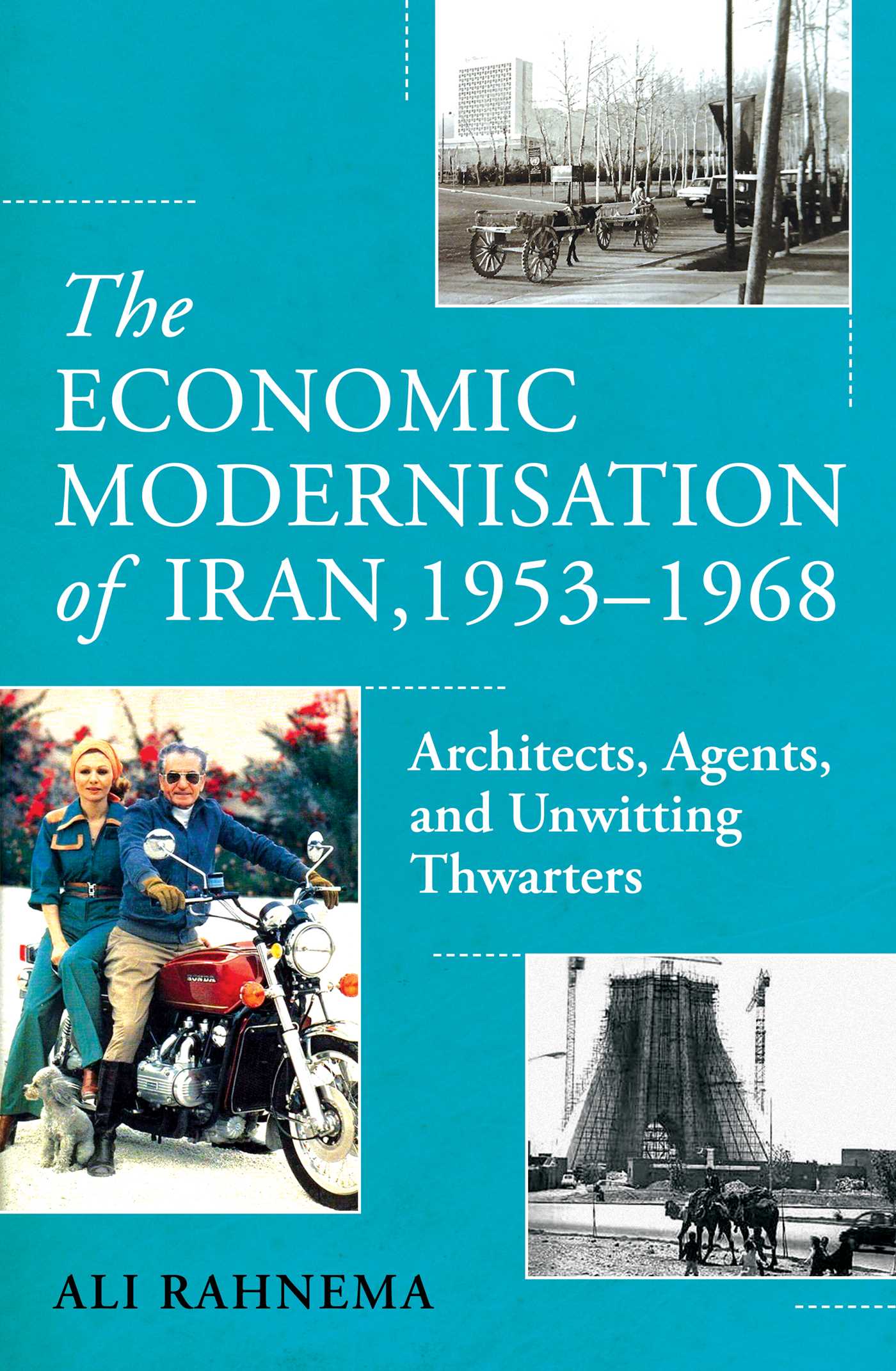
The Economic Modernisation of Iran, 1953–1968
Architects, Agents, and Unwitting Thwarters
By Ali Rahnema
Published by Oneworld Academic
Distributed by Simon & Schuster
Table of Contents
About The Book
In 1953, Iran was at loggerheads with the US and UK, after Prime Minister Mossadeq nationalised Iran’s oil reserves. By 1968, under the autocratic rule of the Shah, Iran was a booming export economy, benefiting from high oil prices and consumer demand. It had unambiguously become a modern industrial economy. Sifting through primary and secondary sources, Ali Rahnema charts Iran’s progress in this vital fifteen-year period. He asks, who can claim the credit? And who bears the blame for its critical failures?
Product Details
- Publisher: Oneworld Academic (November 20, 2025)
- Length: 448 pages
- ISBN13: 9781836430995
Raves and Reviews
'This is a ground-breaking study of the economic dimension of the modernisation of Iran in the second Pahlavi period. Despite its fundamental importance, the economic history of Iran has, until now, been largely eclipsed by a concentration on politics and ideology. With his book Ali Rahnema, using a finely granular analysis, has taken this Cinderella of the social sciences and restored it to its true centrality, placing it at the heart of the fifteen key years between the coup of 1953 and the beginning of the fourth Five-Year Plan in 1968. The book is important and original, offers new challenges to scholarship on modern Iran, and will undoubtedly become a classical account of its subject.' Stephanie Cronin, author of Social Histories of Iran
'Rahnema has provided a vital and insightful study of the political economy of Iran in that pivotal period from 1953–68, when significant economic growth began to make itself felt. This was a period which enthused a generation of Iranians who were ambitious for their country and this study has rightly brought some of its leading – highly competent – technocrats such as Abolhasan Ebtehaj, back to the centre of the narrative. This is a tragedy of good intentions derailed by the vagaries of political vanity: a process of economic modernisation that fatally outstripped the political development of the country.' Ali Ansari, author of Iran: A Very Short Introduction
'This is a groundbreaking study of how economic modernisation in Iran was cobbled together through ongoing rivalries among the country's political and economic elite… Based on extensive archival research and armed with his usual rigor, open minded curiosity and sharp insights, Rahnema explores the intense and consequential ideational power dynamics between the Shah and his rotating teams of technocrats, policymakers, legislators, and influential private entrepreneurs that shaped the country’s rapid and top-down modernisation.' Kaveh Ehsani, editor of Working for Oil
Resources and Downloads
High Resolution Images
-
Book Cover Image (jpg): The Economic Modernisation of Iran, 1953–1968
eBook 9781836430995