Get our latest book recommendations, author news, and competitions right to your inbox.
Published by Wisdom Publications
Distributed by Simon & Schuster
Table of Contents
About The Book
Offering mandala is a powerful ritual that enables the practitioner to generate immeasurable merit. Here, beloved and respected teacher Lama Zopa Rinpoche shows what this practice means and how to incorporate it into our lives.
The ancient Buddhist King Ashoka in a previous life had nothing of value to offer to the Buddha, so he instead offered sand that he visualized as gold, showing that the merit of making offerings is generated by the visualization, not just the physical materials. In a similar way, one can visualize entire universes as mandalas that one can offer to generate great merit.
Lama Zopa details the mandala offering, describing it as an essential and powerful Buddhist practice for accumulating merit and purifying obstacles. The visualization of the universe is based on traditional Buddhist cosmology. This world system consists of Mount Meru at the center, surrounded by four main continents and eight subcontinents, the sun, and the moon, all enclosed by a ring of iron mountains. This entire cosmos, with its desire, form, and formless realms, is mentally transformed and offered. The practitioner transforms any ugly or undesirable places into beautiful, pure realms before offering this universe to the "merit field," the collection of holy beings from the guru to bodhisattvas to buddhas.
Lama Zopa goes on to describe the steps of performing these visualizations with the aid of a “mandala set,” with the practitioner placing heaps of rice on a base to symbolize the various components of the universe to be offered.
The text outlines the different types of mandala offerings—outer, inner, secret, and absolute—and provides detailed instructions for the "long mandala" or thirty-seven-heap offering, explaining the visualization for each heap, including the continents, precious objects, and goddesses. It also covers the shorter seven-heap mandala and a prayer for offering the objects of the three poisons (attachment, anger, and ignorance). Finally, Lama Zopa stresses the vital importance of dedicating the merit at the end of the practice and directing it toward the enlightenment of all beings.
The ancient Buddhist King Ashoka in a previous life had nothing of value to offer to the Buddha, so he instead offered sand that he visualized as gold, showing that the merit of making offerings is generated by the visualization, not just the physical materials. In a similar way, one can visualize entire universes as mandalas that one can offer to generate great merit.
Lama Zopa details the mandala offering, describing it as an essential and powerful Buddhist practice for accumulating merit and purifying obstacles. The visualization of the universe is based on traditional Buddhist cosmology. This world system consists of Mount Meru at the center, surrounded by four main continents and eight subcontinents, the sun, and the moon, all enclosed by a ring of iron mountains. This entire cosmos, with its desire, form, and formless realms, is mentally transformed and offered. The practitioner transforms any ugly or undesirable places into beautiful, pure realms before offering this universe to the "merit field," the collection of holy beings from the guru to bodhisattvas to buddhas.
Lama Zopa goes on to describe the steps of performing these visualizations with the aid of a “mandala set,” with the practitioner placing heaps of rice on a base to symbolize the various components of the universe to be offered.
The text outlines the different types of mandala offerings—outer, inner, secret, and absolute—and provides detailed instructions for the "long mandala" or thirty-seven-heap offering, explaining the visualization for each heap, including the continents, precious objects, and goddesses. It also covers the shorter seven-heap mandala and a prayer for offering the objects of the three poisons (attachment, anger, and ignorance). Finally, Lama Zopa stresses the vital importance of dedicating the merit at the end of the practice and directing it toward the enlightenment of all beings.
Excerpt
What it Means to Offer a Mandala
The mandala offering is an extremely powerful method to quickly accumulate extensive merit and receive realizations such as bodhichitta and emptiness. Just as great strength is needed to carry a heavy load, a great amount of merit is needed to lead all sentient beings to enlightenment, and we can offer nothing more meritorious than a mandala.
The Sanskrit term mandala means “circle.” In Tibetan it is kyilkhor, “taking the essence”; kyil literally means “center” but it refers to the essence, and khor means “taking.” So, while mandala, or kyilkhor, could be translated literally as “being around the center,” the actual meaning is “taking the essence.” What is that essence? It is bodhichitta.
People will go to a big supermarket crowded with all sorts of things rather than a small store that is practically empty because they can get what they need there. So, kyil, the essence, could refer to what we need and want, and khor to being able to take it, “taking what is essential.” The essence we take is the whole path from guru devotion to enlightenment. By doing this practice we receive inconceivable temporal and ultimate happiness.
To offer a mandala, we visualize the entire universe—the worlds and the beings that inhabit those worlds—and we offer it to the merit field, the collection of holy beings we have visualized in front of us. With the practice of offering mandala, by attaining the greatest possible merit, we are able to generate the essential realizations of both the method and wisdom sides of the sutra path as well as the essential realizations of the tantric path.
We offer all the worlds, even though generally they are filled with suffering. Offering mandala, we skillfully transform those suffering worlds in order to accumulate incredible merit. In this way, no matter how many worlds there are, they become places for accomplishing everlasting happiness. Similarly, our body is impure and its nature is suffering, and if we utilize it to accumulate negative karma, it becomes a field from where suffering arises. However, if we transform it into the form of a mandala and offer it, it becomes a field from where temporal and ultimate happiness arise.
Therefore, offering mandala is an essential practice. It is essential for anybody who wishes to attain any realization on the spiritual path. It is essential not just for meditators striving to achieve realizations of renunciation, bodhichitta, and emptiness, but even highly realized beings who have attained the generation stage, the first of the two stages of highest yoga tantra.[1] We therefore obviously should do this practice. Once we have received an initiation, if we do not keep offering mandalas until we have reached the completion stage, the second of the two stages, there is danger of receiving life hindrances from spirits—yet another reason why offering mandala is a vital practice.
The mandala offering is an extremely powerful method to quickly accumulate extensive merit and receive realizations such as bodhichitta and emptiness. Just as great strength is needed to carry a heavy load, a great amount of merit is needed to lead all sentient beings to enlightenment, and we can offer nothing more meritorious than a mandala.
The Sanskrit term mandala means “circle.” In Tibetan it is kyilkhor, “taking the essence”; kyil literally means “center” but it refers to the essence, and khor means “taking.” So, while mandala, or kyilkhor, could be translated literally as “being around the center,” the actual meaning is “taking the essence.” What is that essence? It is bodhichitta.
People will go to a big supermarket crowded with all sorts of things rather than a small store that is practically empty because they can get what they need there. So, kyil, the essence, could refer to what we need and want, and khor to being able to take it, “taking what is essential.” The essence we take is the whole path from guru devotion to enlightenment. By doing this practice we receive inconceivable temporal and ultimate happiness.
To offer a mandala, we visualize the entire universe—the worlds and the beings that inhabit those worlds—and we offer it to the merit field, the collection of holy beings we have visualized in front of us. With the practice of offering mandala, by attaining the greatest possible merit, we are able to generate the essential realizations of both the method and wisdom sides of the sutra path as well as the essential realizations of the tantric path.
We offer all the worlds, even though generally they are filled with suffering. Offering mandala, we skillfully transform those suffering worlds in order to accumulate incredible merit. In this way, no matter how many worlds there are, they become places for accomplishing everlasting happiness. Similarly, our body is impure and its nature is suffering, and if we utilize it to accumulate negative karma, it becomes a field from where suffering arises. However, if we transform it into the form of a mandala and offer it, it becomes a field from where temporal and ultimate happiness arise.
Therefore, offering mandala is an essential practice. It is essential for anybody who wishes to attain any realization on the spiritual path. It is essential not just for meditators striving to achieve realizations of renunciation, bodhichitta, and emptiness, but even highly realized beings who have attained the generation stage, the first of the two stages of highest yoga tantra.[1] We therefore obviously should do this practice. Once we have received an initiation, if we do not keep offering mandalas until we have reached the completion stage, the second of the two stages, there is danger of receiving life hindrances from spirits—yet another reason why offering mandala is a vital practice.
About The Author
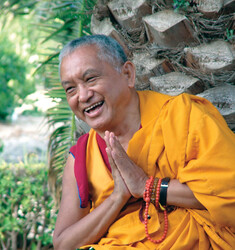
Lama Zopa Rinpoche is one of the most internationally renowned masters of Tibetan Buddhism, working and teaching ceaselessly on almost every continent. He is the spiritual director and cofounder of the Foundation for the Preservation of the Mahayana Tradition (FPMT), an international network of Buddhist projects, including monasteries in six countries and meditation centers in over thirty; health and nutrition clinics, and clinics specializing in the treatment of leprosy and polio; as well as hospices, schools, publishing activities, and prison outreach projects worldwide. Lama Zopa passed away on April 13, 2023.
Product Details
- Publisher: Wisdom Publications (November 10, 2026)
- Length: 168 pages
- ISBN13: 9781614299813
Resources and Downloads
High Resolution Images
-
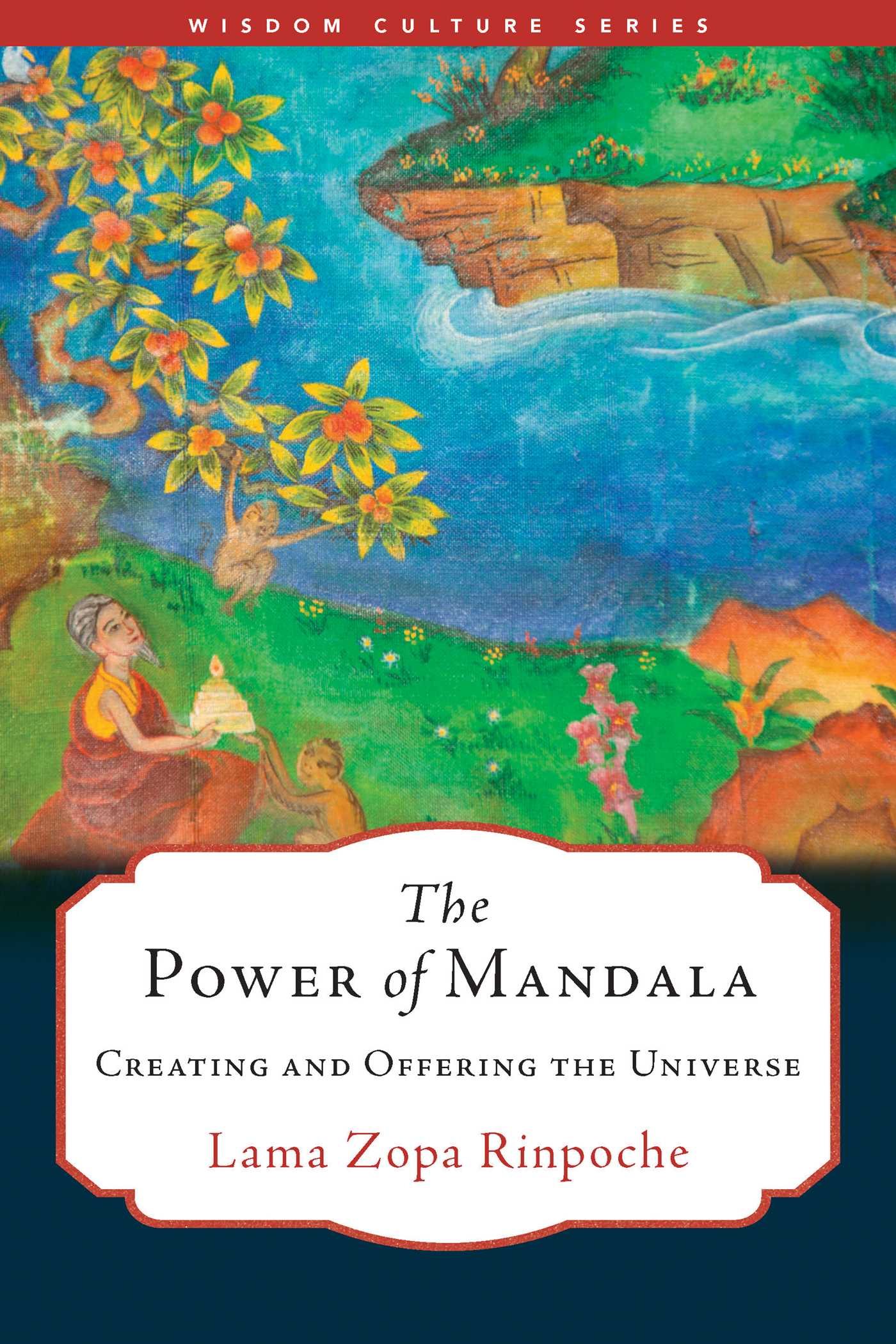
Book Cover Image (jpg): The Power of Mandala
eBook 9781614299813
-
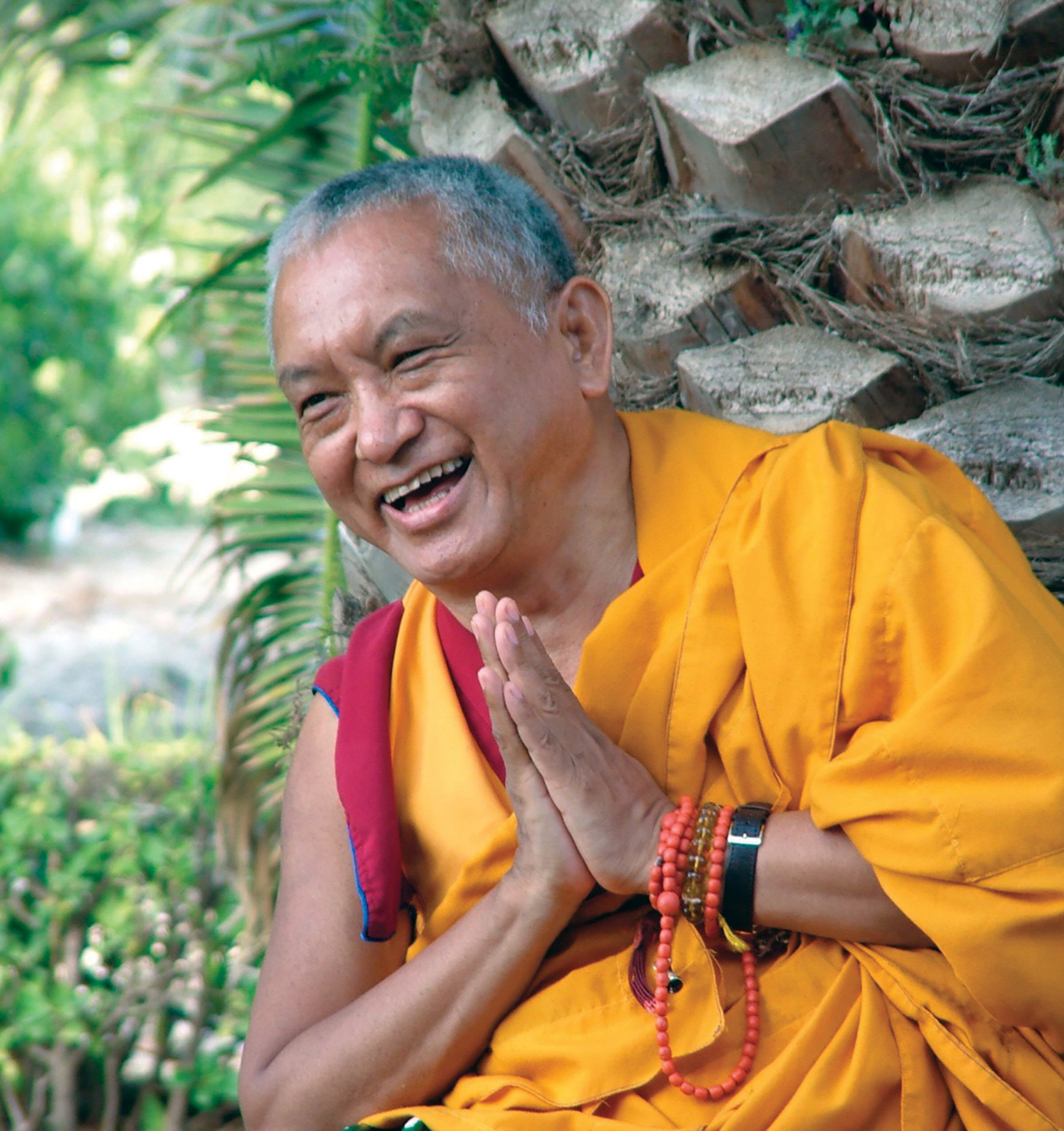
Author Photo (jpg): Lama Zopa Rinpoche
(0.1 MB)
Any use of an author photo must include its respective photo credit