Get our latest book recommendations, author news, and competitions right to your inbox.
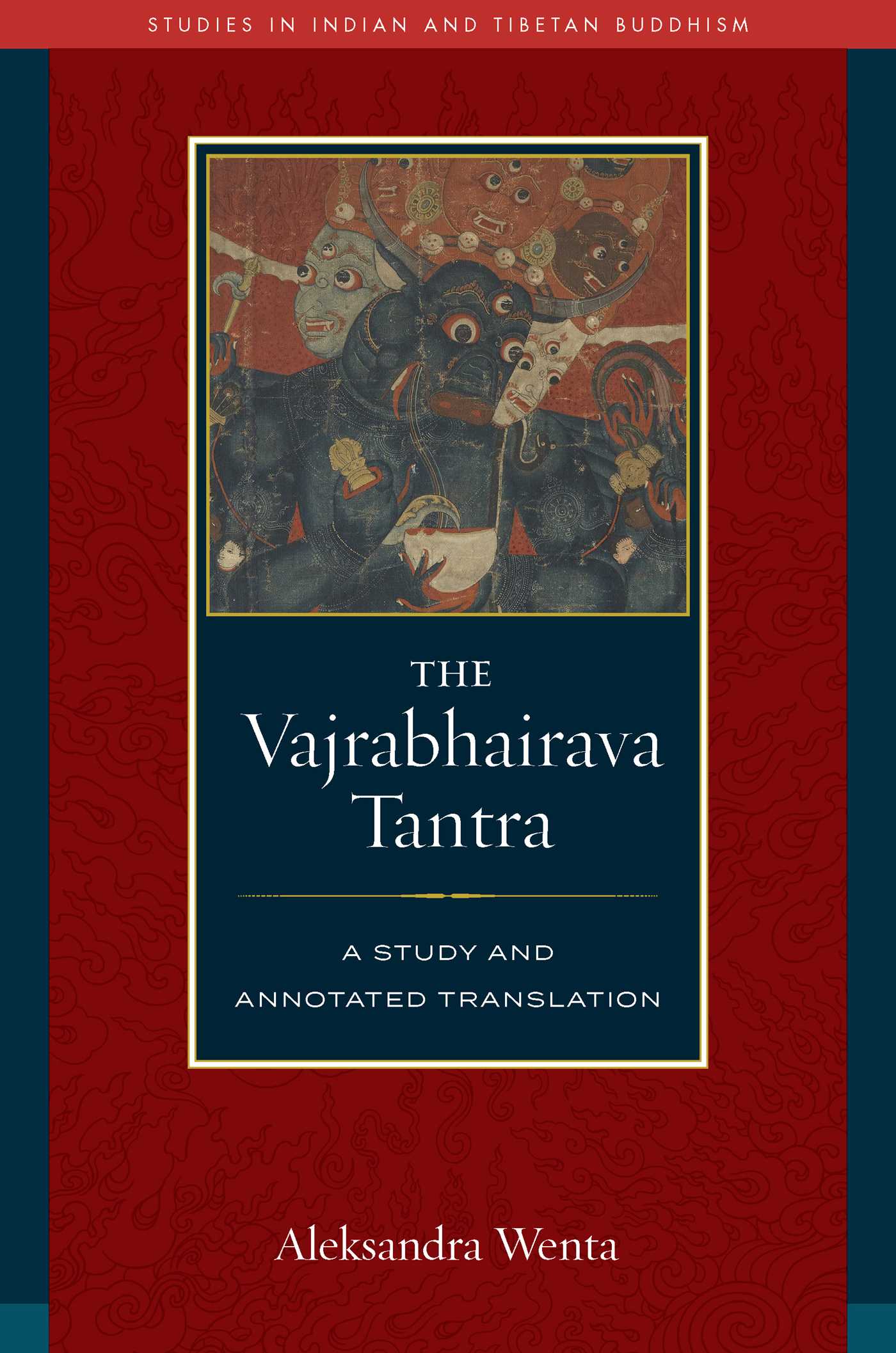
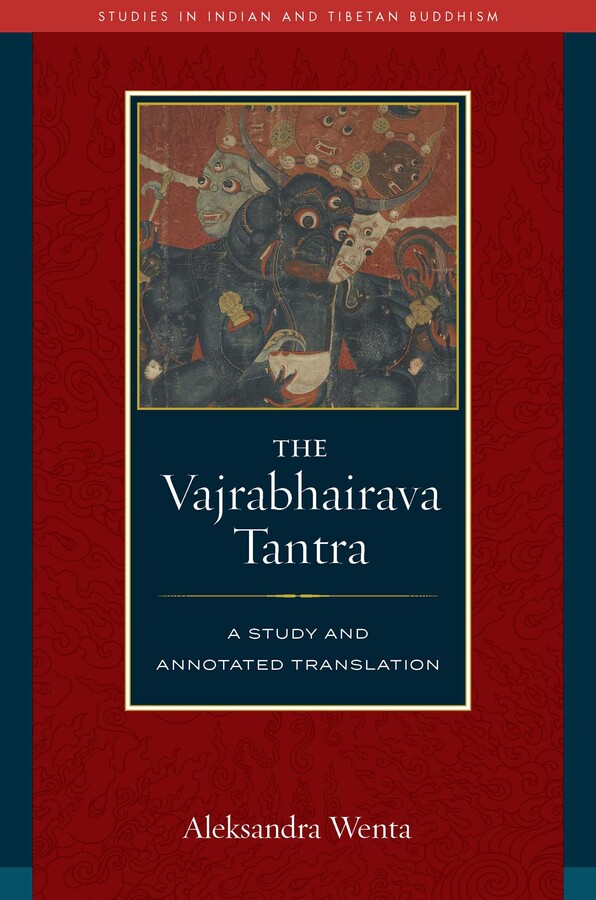
The Vajrabhairava Tantra
A Study and Annotated Translation
Published by Wisdom Publications
Distributed by Simon & Schuster
Table of Contents
About The Book
A groundbreaking work on the little-studied Indian origins of an influential tantric Buddhist practice along with a fresh English translation.
The deity Vajrabhairava, or Yamantaka, is well known as the central figure of tantric practice in multiple lineages of Tibetan Buddhism and is also found in Chinese and Japanese Buddhism. Less is known about its foundational Indian context. The Vajrabhairava Tantra, dedicated to the buffalo-headed deity Vajrabhairava, arose around the eighth century and had a considerable impact on the formation of religious praxis in the medieval Indian Buddhist world. This book contains a translation of the Vajrabhairava Tantra from the recently discovered Sanskrit text and a comprehensive study of its elements, of its origins and Indian commentators, and of the history of its transmission to Tibet. The annotation to the translation excerpts all six Indian commentaries on the tantra found in the Tibetan canon.
One highly innovative contribution this work makes to the fields of tantric Buddhist studies and, more generally, to South Asian religions is the way it breaks down traditional disciplinary boundaries between tantra and magic. It shows that the genesis of tantric traditions cannot be reduced to a one-way influence of Hindu Shaivism on Buddhism or vice versa, but indicates a widespread “culture of magic,” a common “ritual syntax,” that crossed sectarian, linguistic, and socio-cultural boundaries, one that came to be significantly diminished in later Shaiva and Buddhist tantras.
The study comprises the first half of the book, and the second half is the translation, which explains the construction of the mandala, the magical applications of the practice, the extraction of the mantra, the visualization, and the preparation of the pata painting and the homa fire ritual. A dozen color plates illustrate Vajrabhairava in his Solitary Hero and other forms along with mandalas of five different lineages, keys for which are provided in the appendix.
Not only is the English translation of the Vajrabhairava Tantra the first to be based on a Sanskrit manuscript, but also the comprehensive study of all six canonical commentaries is the first to investigate the key commentaries by Akshobhya and Krishnacharya.
The deity Vajrabhairava, or Yamantaka, is well known as the central figure of tantric practice in multiple lineages of Tibetan Buddhism and is also found in Chinese and Japanese Buddhism. Less is known about its foundational Indian context. The Vajrabhairava Tantra, dedicated to the buffalo-headed deity Vajrabhairava, arose around the eighth century and had a considerable impact on the formation of religious praxis in the medieval Indian Buddhist world. This book contains a translation of the Vajrabhairava Tantra from the recently discovered Sanskrit text and a comprehensive study of its elements, of its origins and Indian commentators, and of the history of its transmission to Tibet. The annotation to the translation excerpts all six Indian commentaries on the tantra found in the Tibetan canon.
One highly innovative contribution this work makes to the fields of tantric Buddhist studies and, more generally, to South Asian religions is the way it breaks down traditional disciplinary boundaries between tantra and magic. It shows that the genesis of tantric traditions cannot be reduced to a one-way influence of Hindu Shaivism on Buddhism or vice versa, but indicates a widespread “culture of magic,” a common “ritual syntax,” that crossed sectarian, linguistic, and socio-cultural boundaries, one that came to be significantly diminished in later Shaiva and Buddhist tantras.
The study comprises the first half of the book, and the second half is the translation, which explains the construction of the mandala, the magical applications of the practice, the extraction of the mantra, the visualization, and the preparation of the pata painting and the homa fire ritual. A dozen color plates illustrate Vajrabhairava in his Solitary Hero and other forms along with mandalas of five different lineages, keys for which are provided in the appendix.
Not only is the English translation of the Vajrabhairava Tantra the first to be based on a Sanskrit manuscript, but also the comprehensive study of all six canonical commentaries is the first to investigate the key commentaries by Akshobhya and Krishnacharya.
Product Details
- Publisher: Wisdom Publications (September 2, 2025)
- Length: 376 pages
- ISBN13: 9781614298694
Raves and Reviews
“Aleksandra Wenta’s The Vajrabhairava Tantra: A Study and Annotated Translation is an important new work in the field of Buddhist Studies. It focuses on The Vajrabhairava Tantra, an important Indian tantric Buddhist work with strong connections with Saiva and Sakta Hindu traditions, and which became very influential in Tibet. Its solid English translation makes this text available to a much wider audience. It also features a detailed introduction that sheds light on the text’s history, and discusses the ritual and contemplative practices described by the text. This text is a must-read for anyone interested in the history and development of tantric traditions in India and Tibet. It should also be of interest to tantric practitioners seeking to learn more about the scriptural foundations of contemporary practice traditions. Art historians should also take note of the text’s fifth chapter, which details the procedure for painting sacred images of the deity in this tradition.
– David B. Gray, Bernard J. Hanley Professor of Religious Studies, Santa Clara University
“Wenta’s study and translation, based on the Sanskrit and Tibetan texts and commentaries, presents an important eighth-century tantric Buddhist text that has received surprisingly little previous attention from scholars. Features include its substantial use of Saiva elements and the many insights it offers into later stages of Buddhist tantra. Wenta’s introduction lucidly discusses the various issues associated with the text and its history, while her translation gives a clear English version with detailed notes. Scholars of tantra and related areas will find much of value.”
– Geoffrey Samuel, professor, School of Religious and Theological Studies at Cardiff University and author of Tantric Revisionings
“An important contribution to our knowledge of Vajrayana Buddhism, this clear and insightful book sheds light on topics including the influence of Saivism on Buddhist tantric practice, and the role of violent and ‘love’ magic in the tantras. Wenta follows the traces of Vajrabhairava in India through to the deity’s transmission to Tibet, and its central role in the practices of the Sakya and Geluk schools. Essential reading.”
– Sam van Schaik, head of the Endangered Archives Programme at the British Library and author of Tibet: A History
“Aleksandra Wenta’s masterful translation of the Vajrabhairava Tantra sets a new gold standard in Buddhist tantric studies. Her rigorous intertextual analysis demonstrates how tantric practices transcended sectarian boundaries, illuminating the complex interplay between Buddhist and Saiva textual traditions, iconography, and ritual systems in medieval India. This definitive work corrects previous translations and transforms our understanding of a spellbinding tantric text that has shaped religious traditions across Asia for centuries.”
– Bryan J. Cuevas, translator of The All-Pervading Melodious Drumbeat: The Life of Ra Lotsawa
Resources and Downloads
High Resolution Images
-
Book Cover Image (jpg): The Vajrabhairava Tantra
eBook 9781614298694